
Article
Say goodbye to burnout: how to recognise, prevent and recover
Learn how to spot burnout early, prevent it with simple strategies, and recover your energy with practical tools for wellbeing and resilience.
 Written by
Clare E Kenny
Written by
Clare E Kenny
- Published
- Reading time
- 5 min read
Burnout has been more than just a topic I teach, it’s something I’ve experienced myself (many times). For years, I lived in a constant state of "never enough." No matter how much I achieved, I felt I had to push harder, do more, and prove myself. I told myself I’d rest when I was done, but of course, I was never done.
It wasn’t until I hit a point of complete exhaustion that I realised what I was experiencing wasn’t just stress, it was burnout. I was mentally foggy, emotionally detached, and running on empty. Since then, I’ve been on my own journey to unpick those patterns, to let go of the relentless drive to do it all, and to practise simply saying 'that's enough for today!'
When I recently delivered a workshop on burnout prevention, I saw so many people nodding along as I spoke about these patterns, because they’re incredibly common. We explored the science of stress, the early warning signs of burnout, and the simple yet powerful strategies that can help you reset, recover, and build resilience.
Here’s what I’ve learned, both from my own experience and from supporting others, about how to spot burnout early, break free from the "never enough" mindset, and create a healthier way of working.
How to recognise burnout before it escalates
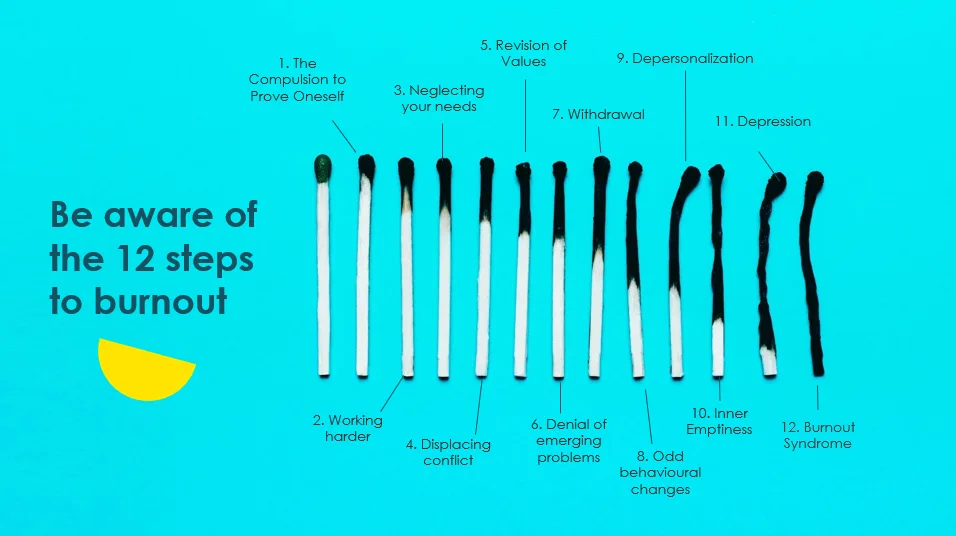
Burnout builds slowly, which makes it easy to miss. Understanding the 12 stages of burnout helps you spot the signs early...
We also discussed three main types of burnout -
Overload burnout - driven by pressure and long hours
Under-challenge burnout - caused by boredom or lack of stimulation
Neglect burnout - linked to feeling unsupported or helpless
Watch for signs like persistent exhaustion, cynicism, or feeling ineffective at work. Early awareness is the first step in preventing burnout.
The mindsets that lead to burnout
Burnout often isn’t caused by workload alone - it’s also about how we think. Unhelpful beliefs such as...
“I’ll rest when I’m done.”
“If I slow down, I’ll fall behind.”
“I have to be strong and handle it all.”
These mindsets can keep us stuck in a cycle of overwork and self-neglect.
Instead, we need to redefine productivity to include rest and recovery...
Rest: Sleep improves memory, focus, and problem-solving.
Joy: Activities you enjoy boost energy, motivation and creativity.
Connection: Strong social ties reduce stress and improve wellbeing.
Regulation: Quiet, restorative moments - even just sitting still - signal safety to your nervous system.
How to complete the stress cycle
Stress is a physical response, not just a mental one. When we don’t give our bodies a way to discharge it, stress lingers and builds up, fuelling burnout.
To manage stress and protect against burnout, try these simple, proven techniques...
Exercise or movement - the fastest way to complete the stress cycle.
Breathing exercises - slow, deep breathing calms your nervous system.
Laughter or crying - emotional release helps reset your body.
Connection - hugs, conversation or affection signal safety.
Creative outlets - drawing, writing, or making something can reduce stress.
Micro boundaries and the power of saying 'that's enough'
Preventing burnout isn’t about drastic life changes; it’s about small, consistent boundaries.
Examples include...
Logging off at the end of the workday
Blocking out focus time in your diary
Switching off notifications in the evening
We also explored the power of saying 'that's enough' - the practice of knowing when to stop. Instead of constantly chasing “more”, ask...
What’s enough for today?
Would it matter if I stopped here?
Often, the honest answer is “no”. This simple mindset shift is powerful for breaking the cycle of overwork.
Building burnout buffers
Burnout prevention is about more than reducing stress - it’s about actively supporting your mind and body with burnout buffers...
Sleep: Quality rest repairs and restores your brain and body.
Food: Nutritious meals stabilise energy and focus.
Movement: Daily activity helps discharge stress.
Sunlight: Exposure to natural light improves mental health.
Connection: Supportive relationships protect against stress and build resilience.
Recovering from burnout
If you’re already experiencing burnout, recovery takes time but it is absolutely possible. It begins with rest and reintroducing small, sustainable changes: better sleep, gentle movement, nutritious food, and reducing demands where possible. Prioritise these basics and rebuild gradually.
And don't forget...
Burnout isn’t a personal failing - it’s a signal from your body that something needs to change. By learning to recognise the signs, challenge unhelpful mindsets, and build in daily recovery habits, you can protect your energy and create a healthier, more sustainable way of working.
What’s one small step you can take today to protect your wellbeing and say goodbye to burnout?
Want more practical insights on leadership, wellbeing and culture? Subscribe to my newsletter for real stories, fresh thinking, and tools that help your people thrive. clareekenny.com/subscribe
Ideas and resources
More from me
Twice a month
Newsletter
Short, practical thinking on survival mode, psychological safety and burnout at work.
Subscribe to the newsletterPDF guides and tools
Free resources
Guides and tools for psychological safety, burnout and neuroinclusion.
Explore free resources