Article
How to boost trust and psychological safety in your workplace
Discover six practical ways to build psychological safety and trust in your workplace. Learn how inclusive leadership creates high-performing, resilient teams where…
 Written by
Clare E Kenny
Written by
Clare E Kenny
- Published
- Reading time
- 4 min read
When was the last time someone on your team said, “I don’t know” out loud? Or challenged an idea without worrying about the consequences? If your answer is rarely, then this guide is for you!
Psychological safety at work isn’t just a buzzword, it’s the foundation of high-performing, healthy teams. But creating that safety takes more than good intentions. It takes brave, intentional leadership.
What is psychological safety, and why does it matter?
First coined by Harvard professor Amy Edmondson, psychological safety is “a shared belief that the team is safe for interpersonal risk-taking.” In practice, this means people feel they can speak up, admit mistakes, ask questions, and offer ideas, without fear of judgement or punishment.
Why does it matter? Google’s landmark Project Aristotle found psychological safety to be the number one factor in successful teams, outweighing even clarity, dependability, and meaning. It fuels learning, creativity, inclusion...and performance!
Without psychological safety in the workplace, innovation stalls, mistakes are hidden, and diverse voices go unheard.
How to build psychological safety: six practical habits for leaders
Here’s how to start embedding trust and safety into your team’s daily rhythm...
1. Model vulnerability
Go first. Admit when you’re unsure or got something wrong. Share the “messy middle,” not just the polished outcome. Small moments of honesty - “I’m tired today,” “I didn’t get that right”, build trust faster than any team-building exercise ever could.
“Vulnerability isn’t winning or losing.
It’s showing up when you can’t control the outcome.”
Brené Brown2. Create clarity, not guesswork
Psychological safety for teams isn’t just emotional, it’s structural. People can’t take risks if they don’t know what’s expected. Be clear about roles, goals and ways of working.
Set explicit norms - response times, communication channels, meeting etiquette.
Try kicking off projects with a “how we work” conversation. What does good feedback look like? What’s in and out of scope?
3. Reward “I don’t know” moments
Normalise learning over knowing. Praise people who say - “I’m not sure, but I’ll find out.” It sets a tone where curiosity is valued and mistakes are seen as stepping stones, not shortcomings!
4. Make challenge a ritual, not a risk
If disagreement is only welcome in a crisis, you’ve got a problem. Introduce structured ways for people to speak up before final decisions are made.
Try including anonymous feedback tools, or a regular “What are we missing?” / “What might be wrong with this?” segment in meetings.
5. Notice who’s not speaking...and ask why
Silence isn’t always disengagement. It can be self-protection. Instead of putting people on the spot, check in privately - “What would help you feel more comfortable contributing?”
Also vary how you collect input. Not everyone thinks out loud. Some people prefer time to reflect or share via email.
6. Celebrate intelligent mistakes
When someone takes a smart risk that doesn’t pan out, spotlight the learning. Create a “What we tried” moment to show that thoughtful failure is a sign of progress, not something to hide.
Building Trust - the bedrock of psychological safety
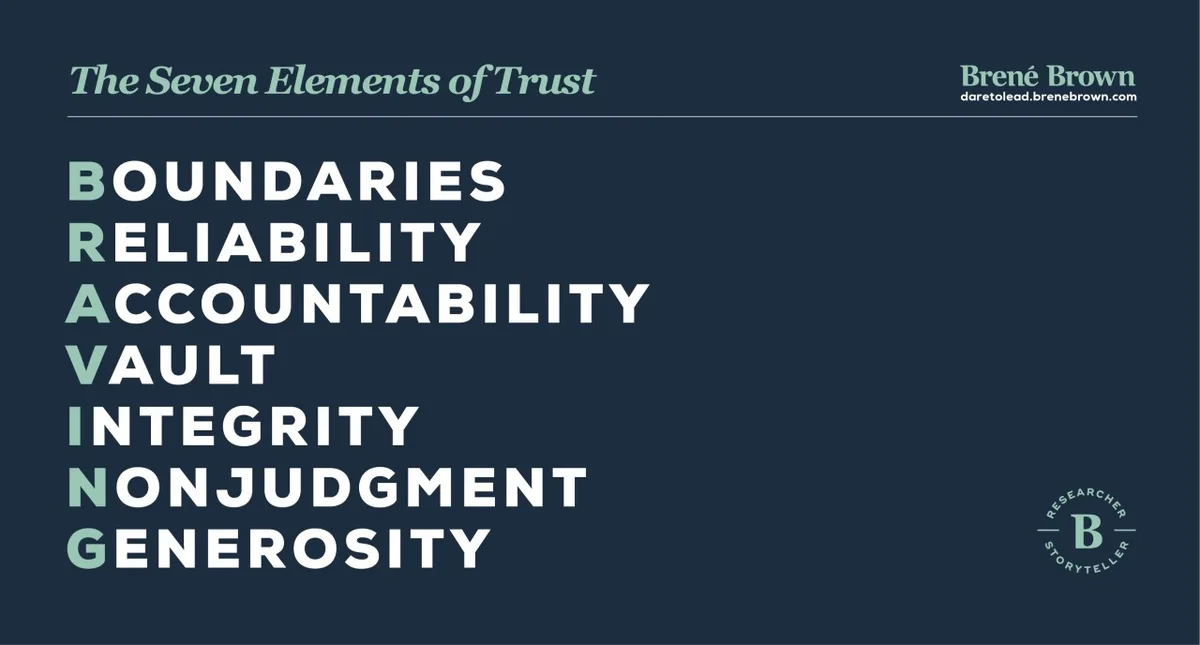
Brené Brown’s BRAVING framework breaks trust down into seven elements: Boundaries, Reliability, Accountability, Vault, Integrity, Non-Judgement, and Generosity.
Ask yourself - where are you strongest? Where could you stretch?
Trust in teams isn’t built through grand gestures. It’s stacked, moment by moment, in how we show up.
Inclusion starts with safety
Dr Timothy Clark’s four stages of psychological safety remind us that safety is a progression.
Inclusion Safety - I belong here.
Learner Safety - I can grow here.
Contributor Safety - I can make a difference here.
Challenger Safety - I can question things here.
High-performing cultures create space for all four.
Watch out for these two pitfalls
The HiPPO Effect - when the Highest Paid Person’s Opinion always dominates, innovation dies. Encourage leaders to share last in meetings, not first.
Volume Bias - those who speak most aren’t always those with the best ideas. Design for all voices, not just the loudest.
Ready to Reflect?
Here are five quick prompts you can explore with your team...
On a scale of 1–10, how safe do you feel speaking up here?
What would help you feel one point higher?
When was the last time someone admitted a mistake?
How often do we hear dissenting views?
Who’s not speaking, and what might help them feel included?
One final thought...
Psychological safety is not a soft skill. It’s a strategic imperative. When people feel safe, they speak up. They grow. They innovate. And they stay.
Creating it starts with you.
Want more practical insights on leadership, culture and wellbeing? Subscribe to my newsletter for fresh thinking, real stories and tools to help your people thrive! https://www.clareekenny.com/subscribe
Ideas and resources
More from me
Twice a month
Newsletter
Short, practical thinking on survival mode, psychological safety and burnout at work.
Subscribe to the newsletterPDF guides and tools
Free resources
Guides and tools for psychological safety, burnout and neuroinclusion.
Explore free resources